System Software
Published: 7 Feb 2026
Imagine turning on your computer, but nothing happens. The screen stays blank, and you can’t access any programs. What’s missing? The answer is computer system software. It’s the hidden force that makes sure everything in your computer works together. This article will dive into what is the system software and why it’s the key to a smooth computer experience.
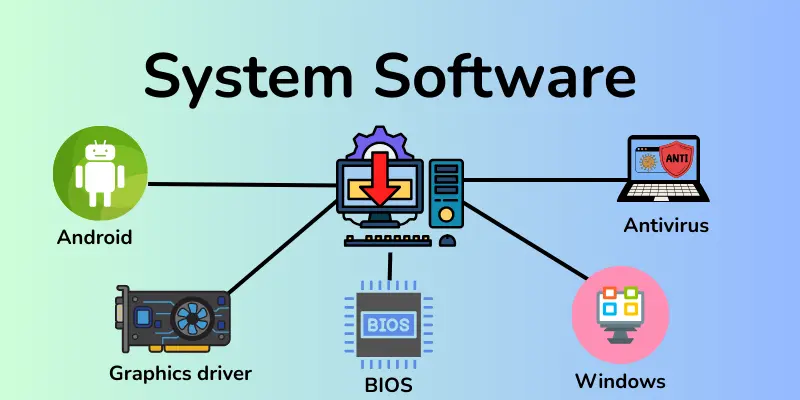
Let’s explore what is computer system software in details.
What is computer system software?
Computer system software is the main software that helps a computer work properly. It controls the hardware and manages all system activities. It also helps other programs run smoothly. Without system software, a computer cannot start or perform any tasks.
Functions of System Software
System software helps the computer run smoothly and controls all system activities. It works in the background to manage hardware and software tasks.
- Starts the computer: Boots the system when you turn it on.
- Controls hardware: Manages devices like keyboard, mouse, and printer.
- Manages memory: Uses RAM properly for smooth performance.
- Runs applications: Helps other software programs work.
- Manages files: Organizes, saves, and opens files.
- Provides security: Protects the system from threats.
- Handles system updates: Keeps the system up to date.
Components of System Software
System software in a computer has different parts that help a computer work properly. Each part has a special job to manage the system and support other programs.
- Kernel: Controls the computer’s core functions and hardware.
- Shell: Provides a way for users to interact with the system.
- File System: Organizes, stores, and manages all files.
- Device Management: Controls devices like printers, keyboards, and mice.
- Utility Programs: Help maintain and optimize the computer system.
Types of system software
System software is divided into several types, each with its own unique function to help the computer run smoothly. Let’s explore these types one by one.

1. Operating System (OS)
It is the main software that runs a computer. It helps control and manage the computer’s hardware, such as the keyboard, mouse, and screen. It also allows you to run programs and apps on the computer. The operating system helps you save, open, and organize your files. Without it, the computer wouldn’t be able to do anything.
Types of operating system
Operating systems come in different types, each designed for specific purposes. Here are the main types of operating systems, explained simply:
- Batch OS: processes tasks in groups without user interaction.
- Time-sharing OS: Allows multiple users to share computer time.
- Distributed OS: Connects multiple computers to work as one.
- Real-Time OS: Handles tasks immediately without delays.
- Network OS: Manages resources in a computer network.
- Mobile OS: Designed for smartphones and tablets like Android and iOS.

2. Utility software
Utility software helps maintain and manage computers. It keeps them running smoothly, cleans junk files, fixes errors, and protects them from viruses. Utility software makes computers safe and easy to use.
Types of Utility Software
Utility software has several types, which are listed below:
- Antivirus Software: Protects the computer from viruses and malware.
- Backup Software: Saves a copy of important files to prevent data loss.
- Disk Cleanup Tool: Removes unnecessary files to free up space.
- File compression software reduces the size of files to save storage.
- Firewall: Blocks unauthorized access to the computer.
- Disk Management Tools: Helps organize and manage storage drives.

3. Firmware software
Firmware is a special type of software stored inside hardware. It helps the hardware do its job correctly. Firmware is built into devices like printers, cameras, and smartphones. It tells the device how to work and what to do. Without firmware, these devices wouldn’t function properly.
Types of firmware software
Firmware has different types, each designed to control specific devices and their functions. These types are listed below:
- BIOS: Controls the basic functions of a computer and starts it up.
- UEFI: loads the operating system and manages hardware with advanced features.
- Embedded firmware: runs simple devices like washing machines or cameras.
- Peripheral Firmware: controls external devices like printers or keyboards.
- Network firmware: helps devices connect to the internet or other networks.

4. Programming Language Translators
Programming language translators are special programs that change the code written by people into a language that computers understand. These translators help computers follow programmers’ instructions. Without them, computers cannot run programs. They make programming easy and helpful for everyone.
Types of Programming Language Translators
It consists of different types, each designed to convert programming code into a language that computers can understand. These types are listed below:
- Compiler: Converts the entire program into machine code at once.
- Interpreter: Translates the program line by line as it runs.
- Assembler: converts assembly language into machine code.

5. System Management Software
System Management Software helps control a computer’s resources, manage memory, tasks, and processes, make the computer work well, check its performance, and fix problems.
Types of System Management Software
It has several types, each designed to manage and control a computer’s resources and performance. The following are some of these types:
- Resource Management Software: Manages and allocates computer resources.
- Performance Monitoring Software: Tracks and improves computer performance.
- Task Management Software: Helps manage and schedule tasks on the computer.
- Backup Software: Protects data by creating backups.

Examples of System Software
System software includes the main programs that help a computer run and work properly. These programs control hardware and support other software.
- Windows: Runs and manages most personal computers.
- macOS: Controls Apple computers and their hardware.
- Linux: An open-source operating system for many devices.
- Android: Runs smartphones and tablets.
- iOS: Operates Apple mobile devices like iPhones and iPads.
- Device Drivers: Help hardware devices communicate with the computer.
- BIOS: Starts the computer and checks hardware at boot time.
Advantages of System Software
System software has many benefits. It helps the computer run smoothly. Some other benefits are listed below:
| Benefits |
|---|
|
Disadvantages of System Software
computer System software also has some downsides. While it helps with computer work, it can sometimes cause problems or be challenging. Here are a few disadvantages:
| Downsides |
|---|
|
Conclusion
So, guys, it’s time to finish up! In this article, we’ve covered system software in detail. It’s clear that system software is essential for running a computer, and understanding its components can help you manage your device better. I recommend exploring different types of system software and how they can improve your computer’s performance. Don’t forget to stay updated and ensure your software always works smoothly for the best results!
FAQs about system software
Here are some common questions about system software with simple answers.
System software in a computer is the main software that controls the computer’s hardware and helps other programs run. It manages system resources and makes the computer work properly.
Examples of system software include operating systems, device drivers, and utility programs.
System software keeps your computer safe by running security programs and updates. It prevents viruses and malware. Regular updates help protect your system.
System software manages tasks like running apps and handling devices. It helps the computer work correctly and cannot function without it.
System software helps a computer work properly and run other programs. It controls hardware, manages files, and allows applications like Word or browsers to open and work smoothly. It also keeps the computer safe and fast.

- Be Respectful
- Stay Relevant
- Stay Positive
- True Feedback
- Encourage Discussion
- Avoid Spamming
- No Fake News
- Don't Copy-Paste
- No Personal Attacks
- Be Respectful
- Stay Relevant
- Stay Positive
- True Feedback
- Encourage Discussion
- Avoid Spamming
- No Fake News
- Don't Copy-Paste
- No Personal Attacks
