Cloud-Based Software Advantages
Published: 8 Jul 2026
Managing software and data has become easier than ever with cloud technology. Instead of installing software on individual computers, users can access cloud-based applications through the internet from almost anywhere. This flexibility has made cloud-based software a popular choice for businesses, organizations, and individuals worldwide.
Cloud-based software offers several advantages, including remote access, lower costs, automatic updates, improved collaboration, enhanced security, and easy scalability. These benefits help users work more efficiently while reducing the need for expensive hardware and ongoing IT maintenance.
In this article, you’ll learn about the key advantages of cloud-based software and why many businesses are choosing cloud solutions to improve productivity, flexibility, and overall performance.
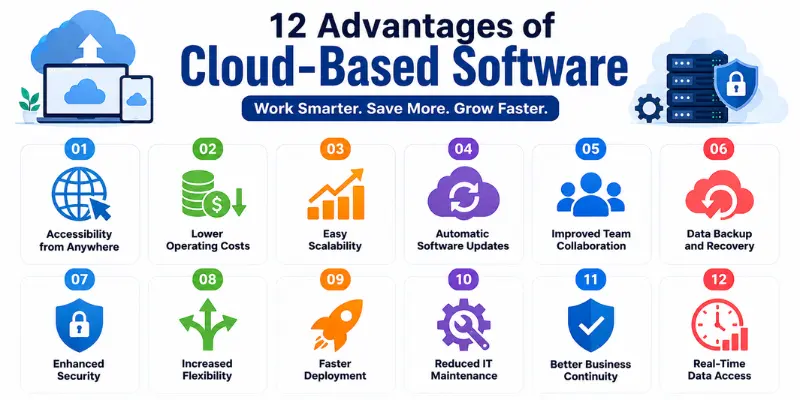
Top Cloud-Based Software Advantages
Cloud-based software provides many benefits that help businesses and individuals work more efficiently. Below are some of the most important advantages.
1. Accessibility from Anywhere
One of the biggest advantages of cloud-based software is remote accessibility. Users can access their applications and data from any location with an internet connection.
This makes it easier to work from home, travel, or collaborate with team members in different locations.
2. Lower Operating Costs
Cloud-based software often reduces costs because users do not need to purchase expensive hardware or maintain on-site servers.
Many cloud solutions use subscription-based pricing, allowing businesses to pay only for the services they need.
3. Easy Scalability
As a business grows, its software requirements may change. Cloud-based software makes it easy to increase or decrease resources based on current needs.
This flexibility allows organizations to scale without making major investments in new infrastructure.
4. Automatic Software Updates
Cloud service providers regularly update their software with new features, performance improvements, and security patches.
Users receive these updates automatically without needing to install them manually.
5. Improved Team Collaboration
Cloud-based software allows multiple users to access, edit, and share information in real time.
This improves teamwork, enhances communication, and helps projects move forward more efficiently.
6. Data Backup and Recovery
Most cloud providers offer automatic backup features that help protect important data.
If a device fails or data is accidentally deleted, users can often restore their information quickly and minimize disruptions.
7. Enhanced Security Features
Many cloud service providers implement advanced security measures such as data encryption, multi-factor authentication, and continuous monitoring.
These features help protect sensitive information from unauthorized access and cyber threats.
8. Increased Flexibility
Cloud-based software allows users to work from different devices and locations without being tied to a specific computer or office.
This flexibility supports modern work environments and changing business needs.
9. Faster Deployment
Traditional software may require lengthy installation and configuration processes.
Cloud-based software can often be deployed quickly, allowing users to start working with minimal setup time.
10. Reduced IT Maintenance
Because the service provider manages the infrastructure, businesses spend less time and effort on software maintenance, updates, and server management.
This allows IT teams to focus on more important business tasks.
11. Better Business Continuity
Cloud-based software helps organizations continue operating during unexpected events such as hardware failures or office disruptions.
Since data is stored remotely, users can often access critical information even when local systems are unavailable.
12. Real-Time Data Access
Cloud applications provide instant access to updated information.
This enables users to make informed decisions based on the most current data available.
Why Cloud-Based Software Is Popular
Cloud-based software has become increasingly popular because it offers convenience, flexibility, and cost savings. Businesses of all sizes use cloud solutions to improve productivity and simplify daily operations.
Some key reasons for its popularity include:
- Supports remote and hybrid work environments
- Reduces hardware and maintenance costs
- Enables real-time collaboration
- Provides easy access to data and applications
- Offers automatic updates and backups
- Scales easily as business needs grow
These benefits make cloud-based software a practical choice for organizations looking to improve efficiency and stay competitive.
Conclusion
So, guys, you should now have a clear understanding of the advantages of cloud-based software. From remote accessibility and lower costs to automatic updates, enhanced security, and improved collaboration, cloud solutions offer many benefits for both businesses and individual users.
As technology continues to evolve, cloud-based software is becoming an essential tool for improving productivity, flexibility, and efficiency. Its ability to provide access to applications and data from virtually anywhere makes it a valuable solution in today’s digital world.
My recommendation is to choose cloud-based software that meets your specific needs, offers strong security features, and scales as your requirements grow. By selecting the right solution, you can maximize the benefits of cloud computing while supporting long-term success.
Frequently Asked Questions (FAQs)
Cloud-based software is an application that runs on remote servers and is accessed through the internet rather than being installed on a local computer.
The main advantages include remote access, lower costs, automatic updates, improved collaboration, enhanced security, and easy scalability.
It allows multiple users to access, edit, and share files in real time, making teamwork more efficient.
Small businesses, large enterprises, startups, educational institutions, and non-profit organizations can all benefit from cloud solutions.

- Be Respectful
- Stay Relevant
- Stay Positive
- True Feedback
- Encourage Discussion
- Avoid Spamming
- No Fake News
- Don't Copy-Paste
- No Personal Attacks
- Be Respectful
- Stay Relevant
- Stay Positive
- True Feedback
- Encourage Discussion
- Avoid Spamming
- No Fake News
- Don't Copy-Paste
- No Personal Attacks
